

Most people think of incontinence as a bladder problem. But if you have ever noticed that your leaks or urgency seem worse when you are constipated, that is not a coincidence. The bowel and bladder are neighbours, and what happens in one directly affects the other.
Why the two are connected
The bladder and rectum sit very close together in the lower abdomen, separated by only a thin layer of tissue. They share the same group of pelvic floor muscles and draw on the same nerve pathways from the spinal cord.
When the rectum fills with hardened stool and becomes enlarged, it presses directly on the bladder. This reduces the space the bladder has to expand as it fills with urine. A compressed bladder reaches its capacity faster, which means it starts sending urgency signals earlier than it normally would. This is why constipation can make you feel like you need to go more often, and why the urge can feel harder to hold off.
The shared nerve pathways play a role too. A distended rectum can overstimulate these nerves, sending signals that trigger bladder contractions before the bladder is actually full. For people already managing urge incontinence, this can tip the balance between making it to the bathroom and not.
Straining makes things worse over time
Beyond the pressure, there is the impact of chronic straining. Every time you strain hard during a bowel movement, you are putting significant downward pressure on the pelvic floor, the group of muscles that supports the bladder and helps control the release of urine.
Over time, repeated straining can overstretch and weaken these muscles. A weakened pelvic floor is less able to withstand sudden pressure, such as a cough, a sneeze, or standing up quickly. If you are already managing stress incontinence, constipation and straining can gradually make it harder to keep things under control.
This is also why pelvic floor exercises matter beyond just doing Kegels when you remember. If the muscles are being regularly strained from below, strengthening them consistently becomes even more important. The exercises in our Kegel series are a good place to start if you are not already doing them.
What to do about it
The good news is that treating constipation often brings noticeable relief for bladder symptoms too.
Fibre and fluids go together. Increasing dietary fibre helps soften stool, but it only works properly when paired with enough water. Fibre without adequate hydration can actually worsen constipation. Aim for steady fluid intake through the day, mainly water, and limit caffeine, which can dehydrate you and also irritates the bladder lining.
Movement helps more than most people expect. Physical activity stimulates bowel motility, meaning it helps things move through the digestive system more regularly. Even a daily walk makes a difference for people who struggle with chronic constipation.
Do not ignore the urge to go. Repeatedly holding off on a bowel movement when the urge comes can cause the stool to harden further and the rectum to stretch over time. Responding to the urge when it arrives, rather than waiting until it is convenient, is one of the simplest ways to prevent constipation from becoming a pattern.
Positioning matters. Sitting with your knees slightly higher than your hips, such as by resting your feet on a small step, puts the body in a more natural position for a bowel movement and reduces the need to strain.
If constipation is ongoing despite these changes, it is worth speaking to a doctor. Sometimes it points to an underlying issue that needs addressing, and a continence nurse or pelvic floor physiotherapist can assess whether the pelvic floor itself needs targeted support.
Managing in the meantime
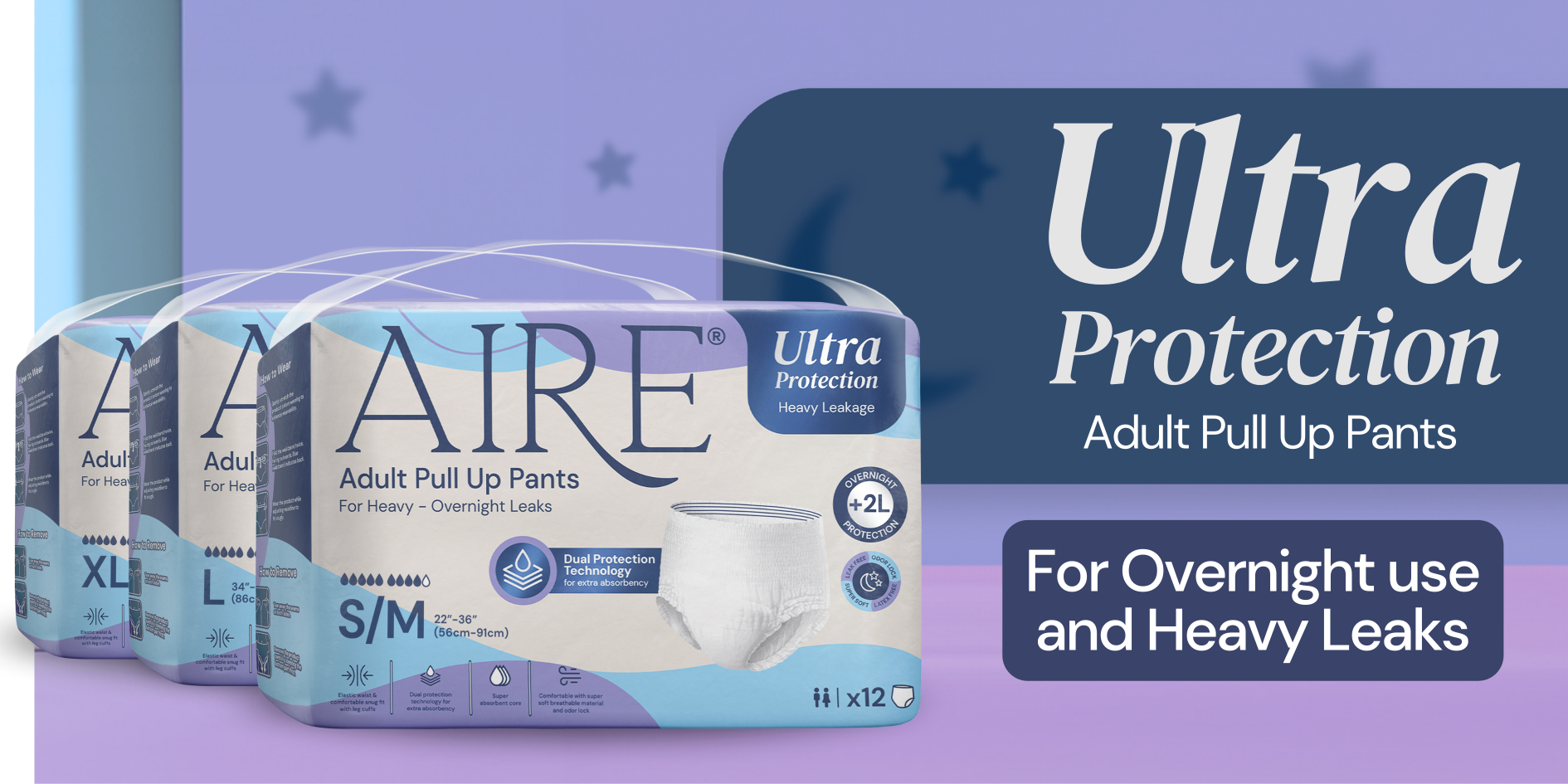
On days when constipation is at its worst, bladder symptoms can be unpredictable. Having the right protection in place removes some of the anxiety, which itself can make urgency easier to manage. If you are not sure which product suits you, Aire offers a free sample pack so you can find the right fit before committing to a full pack.
The connection between constipation and incontinence is real and well recognised. Addressing one tends to help the other, and understanding why makes it easier to take the right steps.
References
UroLondon. Can Constipation Cause Urinary Incontinence? urocarelondon.com
Perifit. Constipation and Urinary Incontinence. perifit.co
