

For anyone managing bladder leaks, the short answer is yes, it can. But the longer answer is more useful, because weight is just one piece of a bigger picture, and understanding how it fits helps you make decisions that actually work for your situation.
Why weight affects the bladder
Carrying extra weight puts consistent pressure on the bladder and the pelvic floor, the group of muscles that support bladder control. When that pressure builds up over time, those muscles have to work harder to hold things in place. Any additional strain, a cough, a sneeze, a moment of urgency, becomes harder to manage.
This is why excess weight is one of the more well-established risk factors for stress incontinence, the kind that causes leaks with physical pressure. It also plays a role in urge incontinence, where the bladder becomes overactive and sends sudden, urgent signals before you can reach the bathroom.
How much of a difference does it make
The evidence here is genuinely encouraging. A large clinical trial published in the New England Journal of Medicine found that women who lost an average of around 8 kilograms over six months experienced 47% fewer incontinence episodes. The control group, who lost very little weight, saw a 28% improvement. That gap is significant.
What is also useful to know is that you do not need to lose a large amount of weight to see results. A review of multiple studies found that losing just 5 to 10% of body weight produced the greatest improvement in incontinence symptoms. For someone weighing 70 kilograms, that is 3.5 to 7 kilograms. A realistic, manageable target that can make a real difference to daily life.
What this means in practice
This is not about pressure to lose weight or reach a particular number on the scale. It is about understanding that for people who are carrying extra weight and managing incontinence, even modest changes can reduce the frequency of leaks in a way that other interventions alone might not achieve.
It also works well alongside other approaches. Pelvic floor exercises strengthen the muscles that support the bladder regardless of weight. Our guide on Kegel exercises is a good starting point if you have not tried them yet. Reducing caffeine, alcohol, and foods that irritate the bladder also helps, and our post on what to eat and drink for better bladder health covers that in detail.
Weight loss alone is rarely the complete answer. But combined with pelvic floor training and some lifestyle adjustments, the results can be meaningful.
Weight is not the whole picture
It is worth being clear that weight is a contributing factor for some people, not a cause for everyone. Plenty of people at a healthy weight experience incontinence too, for reasons that have nothing to do with body size. The type of incontinence you are dealing with matters more than any single factor, and understanding that is a good first step toward finding what actually helps.
If leaks are affecting your daily life, a conversation with your family doctor or a pelvic floor physiotherapist is worth having. Most cases of incontinence have more options than people realise.
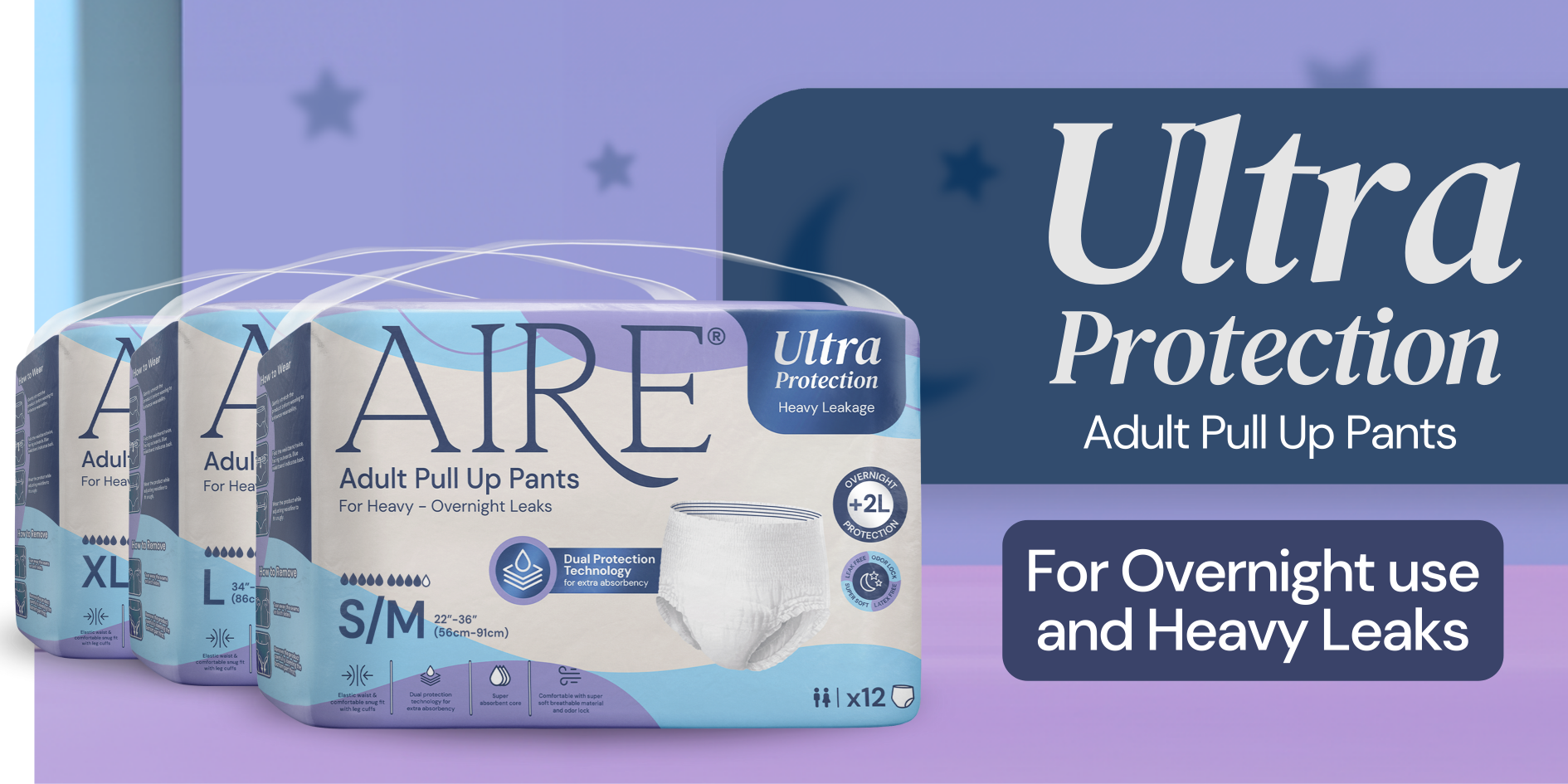
In the meantime, having the right protection in place takes the daily pressure off while you work toward longer-term changes. Aire offers a free sample pack if you
want to find what fits before committing to a full order.
References
Wing RR, et al. (2010). Effect of Weight Loss on Urinary Incontinence in Overweight and Obese Women. Journal of Urology.
Subak LL, Wing R, et al. (2009). Weight Loss to Treat Urinary Incontinence in Overweight and Obese Women. New England Journal of Medicine.
Vissers D, et al. Optimising Weight Loss Advice in Obese Women with Urinary Incontinence. Urology News.
Tala MRZ, et al. (2024). Efficacy of Body Weight Reduction in Improving Overactive Bladder Symptoms in Obese and Overweight Women. Nephro-Urology Monthly.
