

Mother's Day in Singapore tends to arrive with flowers, a family dim sum, and thoughtfully chosen gifts. For many adult children, though, there is a quieter conversation waiting in the background, one that gets postponed year after year because no one wants to bring it up first.
If you have noticed your mother declining long outings, skipping mahjong with Aunty Lim, or quietly doing extra laundry when she thinks no one is looking, she may be managing something she has not told you about: bladder leaks. According to Society for Continence (Singapore), at least 1 in 10 people aged 65 and above in Singapore live with urinary incontinence, and global estimates place prevalence among women between 25 and 45 percent. The real figure is likely higher still, because the condition is so widely under-reported.
The consequences extend beyond inconvenience. Older adults with urinary incontinence face a significantly elevated risk of depression, falls, and social withdrawal, which means her quiet retreat from social life may not be a preference, it may be a symptom.
This Mother's Day, the most meaningful gift you can give her may not come wrapped in ribbon. It may simply be the courage to start the conversation.
Why Your Mother May Not Have Told You
Before you raise the subject, it helps to understand what she may be carrying internally:
- Shame and loss of dignity: For a generation of Singaporean women who raised families, ran households, and held jobs through decades of change, admitting to a body they can no longer fully control feels like a personal failing
- Fear of becoming a burden: Many mothers who spent their lives as the caregiver find it unbearable to become the one cared for, especially in multigenerational households
- Worry about losing independence: She may fear that raising the topic will trigger conversations about giving up solo outings, stopping travel, or moving in with family
- No vocabulary for it: Incontinence was rarely discussed openly in her generation. Some dialects simply do not carry neutral, non-shameful language for it
Common signs include reduced social activity, frequent bathroom trips during outings, the smell of urine in specific rooms or on clothing, an unusual uptick in laundry, and newly purchased sanitary pads used as a quiet workaround.
How to Start the Conversation
The goal is not to solve everything at once. The goal is to open the door.
- Pick a private, unhurried moment. Not at the reunion dinner with cousins around. A quiet afternoon at home, a car ride alone together, or a walk in the park works best
- Lead with observation, not diagnosis. Instead of "Ma, I think you have incontinence," try "Ma, I noticed you've been skipping mahjong lately. Is everything okay?" This lets her share without feeling cornered
- Use "we" language. Framing it as a shared family concern reduces the sense of judgment. "Let's see what we can do together" lands better than "You need to see a doctor"
- Normalise without minimising. Mention that bladder leaks are common and very manageable. Avoid "it's no big deal," which can feel dismissive of her experience
- Be ready for her to deny it the first time. Many mothers will brush off the first conversation. That is normal. You have planted the seed, and you can return to it later
What Can Help: Evidence-Based Steps Before and Beyond Adult Diapers
Modern adult diapers are a practical part of daily life, but they are not the only answer. There is a strong evidence base for behavioural and lifestyle interventions that can reduce or, in many cases, resolve bladder leaks. Encourage your mother to discuss these options with her family doctor or a pelvic floor physiotherapist:
- Pelvic floor muscle training (Kegel exercises): Pelvic floor muscle training is widely recommended as the first-line treatment for stress urinary incontinence. A 2026 systematic review and meta-analysis published in the Journal of Obstetrics and Gynaecology Research confirms that Kegel exercises meaningfully reduce symptoms in women with urinary incontinence. The Mayo Clinic's step-by-step guide is a practical starting point. We walk through it in our step-by-step Kegel exercise guide too.
- Bladder training: Bladder training involves gradually extending the time between bathroom visits to teach the bladder to hold more urine. European Association of Urology guidelines describe it as patient education combined with a scheduled voiding regimen and gradually increasing intervals. A Cochrane review found that bladder training can be helpful for several types of urinary incontinence, though the evidence base still has gaps
- Everyday lifestyle adjustments: Cutting back on caffeine, alcohol, and spicy foods can reduce bladder irritation. Adequate hydration matters in both directions, drinking too little concentrates urine and irritates the bladder, while drinking too much worsens urgency. Weight management and treating constipation also meaningfully reduce leak frequency
- Pelvic floor physiotherapy referral: A qualified pelvic floor physiotherapist can assess muscle strength and design a personalised exercise programme. In Singapore, pelvic floor physiotherapy is available at most public hospitals and selected polyclinics, where treatment is subsidised for eligible patients
Results take time. Pelvic floor training usually needs 6 to 12 weeks of consistent daily practice before noticeable improvement. During that period, AIRE gives your mother the confidence to keep living her life while she and her doctor work on the underlying cause.
What to Look for in Adult Diapers for Mum
One of the most practical things you can do as a caregiver is remove the daily friction incontinence creates. Today's adult diapers are not the bulky, crinkly products of a decade ago, and the right choice depends on her lifestyle and body. If you're not sure where to start, our first-timer's guide to choosing an adult diaper covers the key factors to consider:
- A snug fit designed for Asian bodies: Many international adult diapers start at sizes too large for petite Asian seniors, which causes gaps and leaks. Look for brands that start from smaller waist sizes
- Breathable materials for Singapore's humidity: Traditional adult diapers can feel hot and stuffy on long coach rides, temple visits, or sightseeing days. Breathable fabrics make a significant difference in daily comfort
- Absorbency sized to her outings: A full-day family wedding, a six-hour outing to Sentosa, or an overnight stay shouldn't need to be planned around bathroom stops
- Skin-friendly construction: Older skin is thinner and more vulnerable, and prolonged exposure to urine can cause incontinence-associated dermatitis (IAD), a painful inflammatory skin condition that is common in older adults. High-absorbency products, combined with latex-free, fragrance-free, and lotion-free materials, help reduce overhydration of the skin and lower the risk of irritation or allergic contact dermatitis. Read more in our guide on how to prevent adult diaper rash.
- A pull-up design for active mothers: Pull-up style pants look and feel like regular underwear, letting her keep her independence and her privacy when changing
How AIRE Supports Singaporean Mothers
Travel, family gatherings, and time with grandchildren should not revolve around bathroom logistics. As one of Singapore's trusted adult diaper brands, Aire Adult Incontinence Wear was designed specifically for Asian bodies, because fit matters.
The range starts from 22-inch waist sizes, offering a snug, secure fit that most international brands overlook. Aire Adult Pull Up Pants are designed for active mothers who want to move freely, while Aire Ultra Tape Diapers were developed with caregiver and healthcare professional feedback, for mothers who need fuller support.
Singapore's humidity makes breathable materials essential, and AIRE's fabrics help reduce stuffiness during long outings and overnight wear. All AIRE products are FDA certified, with latex-free, lotion-free, and fragrance-free construction to keep older skin comfortable and irritation-free.
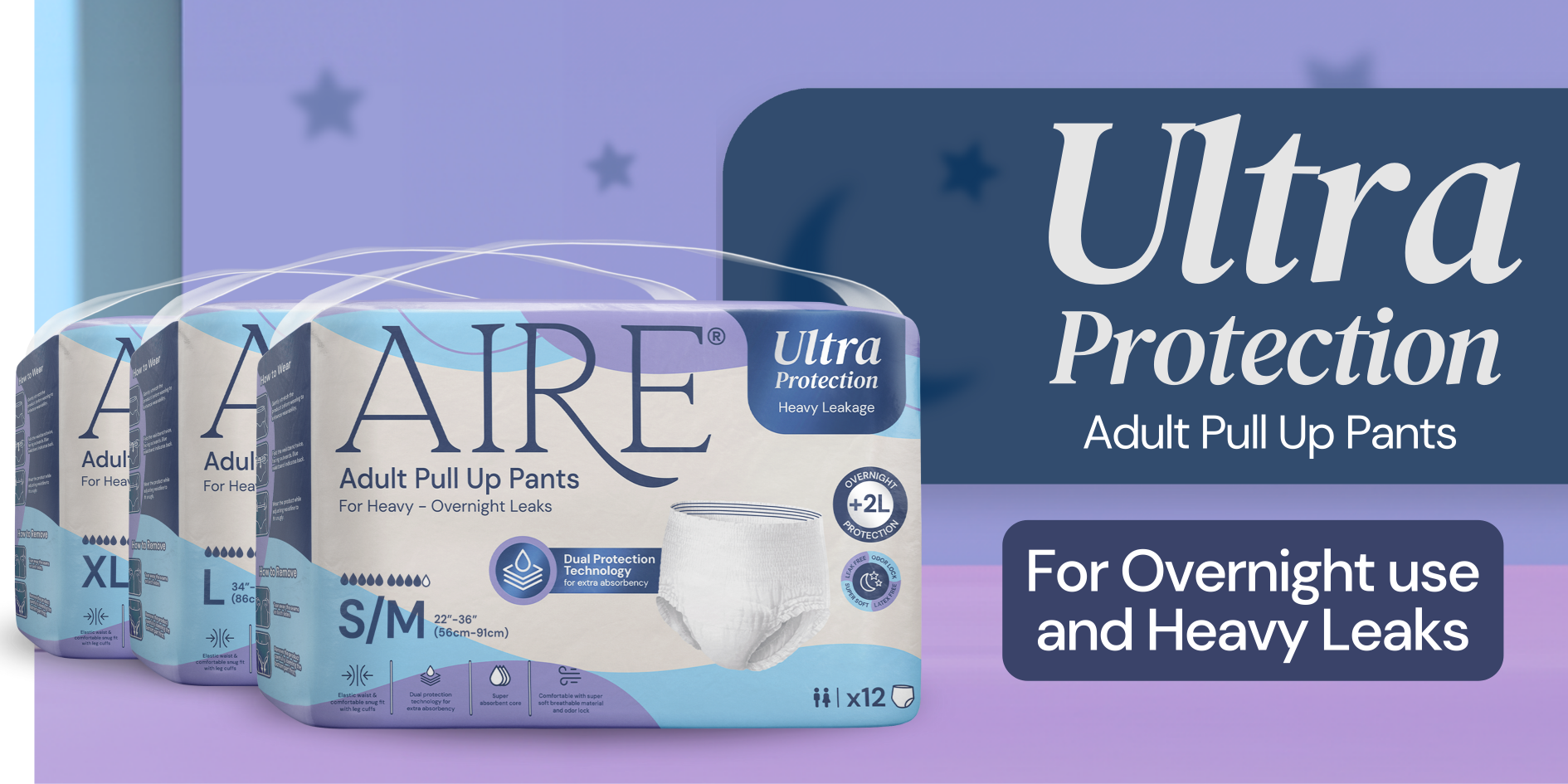
With over 2L of urine absorbency, AIRE Ultra Protection is trusted by thousands of caregivers and healthcare providers for heavy leaks, long outings, and overnight wear. For mothers, that translates into a simple promise: she can commit to the full temple visit, stay for the last toast at her grandchild's wedding, and travel across the Causeway without planning every moment around the nearest bathroom.
When to See a Doctor
Adult diapers manage the symptom, but they do not address the underlying cause, which often can be treated or improved. Pelvic floor muscle training, bladder training, and physiotherapy are first-line, conservative treatments backed by decades of evidence, and many women see meaningful improvement without needing medication or surgery.
Encourage your mother to consult her family doctor or a urologist if her leakage is frequent, painful, sudden in onset, or accompanied by fever or blood. Treatment options in Singapore range from pelvic floor physiotherapy to medication to minimally invasive procedures, many of which are covered under MediSave or subsidised at polyclinics.
The Gift That Actually Matters
The best Mother's Day gifts are rarely the ones wrapped in ribbon. This year, consider giving your mother something she has probably stopped asking for: her freedom to say yes to every invitation, her confidence to laugh without worry, and the knowledge that her family sees her fully and loves her anyway.
Start the conversation. She has been waiting for you to go first.
At AIRE, we believe protection should feel respectful, so she can focus on memories, not mishaps.
Explore AIRE's full range of adult diapers and pull up pants
