

For a lot of people, incontinence feels manageable at home but noticeably worse at work. There is a reason for that, and it is not just about having less access to bathrooms.
Your workplace is actively triggering your bladder
Several things that are completely normal in an office environment can make urgency and leaks worse, and most people do not realise the connection.
Cold air conditioning is one of the biggest. Cold temperatures cause the body to produce more urine quickly, and for people with overactive bladder, the sudden drop in temperature when walking into an air-conditioned space can trigger an immediate, strong urge. This is why the feeling of needing to go urgently the moment you arrive somewhere is not random.
Stress itself affects the bladder directly. When the body is under stress, it releases hormones that sensitise the nerves in the bladder wall, lowering the threshold at which you feel urgency. Chronic stress also triggers inflammation in bladder tissue, which causes the bladder muscle to contract more forcefully than it should. A high-pressure workday, a difficult meeting, or a looming deadline can all make symptoms noticeably worse for this reason.
Sitting for long periods reduces pelvic floor muscle activation. The pelvic floor muscles are not being engaged when you are seated, so they can gradually fatigue and become less responsive over a long day at a desk.
The habit that quietly makes things worse
One of the most common things people do at work is go to the toilet out of pure habit, every time they pass one, every break, every chance they get, even when there is no real urge at all. According to guidance from Pelvic Obstetric and Gynaecological Physiotherapy, one of the key recommendations for managing urgency and frequency is to avoid "just in case" toilet visits entirely.
When you consistently empty the bladder without a genuine urge, the bladder gradually adapts to holding less. It starts sending urgency signals at lower and lower volumes, which can make frequency and urgency worse over time rather than better.
That said, there is a difference between habit trips and practical ones. If you already feel some urge and you know a long meeting or commute is coming up, going beforehand is sensible. The issue is going purely out of anxiety or routine when there is no urge at all.
The better approach is to respond to genuine urges rather than anticipated ones, and when an urge does hit, to practise waiting a few minutes before going rather than rushing immediately. This is the basis of bladder training and one of the most effective non-medication approaches for urge incontinence.
How your type of incontinence shows up differently at work
Stress incontinence tends to be triggered by physical actions: walking quickly, climbing stairs, lifting something, laughing during a meeting, or a sudden cough. The leak happens at the moment of that action and is usually small. Pelvic floor exercises are the main way to address this over time, as the goal is to build the muscle strength that holds under sudden pressure.
Urge incontinence tends to be triggered by the environment: cold air, running water in the office kitchen, arriving at the office, or the anticipation of a long meeting. The urge comes on suddenly and feels hard to delay. Stress makes this type significantly worse, which is why symptoms can feel much more intense during busy or high-pressure periods.
What fluid management actually looks like
Cutting back on fluids to reduce toilet trips is a common instinct but it tends to make things worse. Concentrated urine irritates the bladder lining more than diluted urine, which increases urgency and frequency. The goal is steady, even fluid intake through the day rather than drinking a lot at once or avoiding drinks altogether.
Reducing caffeine is genuinely worth trying for urge incontinence specifically. Caffeine irritates the bladder directly and also acts as a diuretic, increasing urine production. Swapping one or two coffees for water or a non-caffeinated drink makes a noticeable difference for many people.
Small things that actually make a difference at work
Time your bathroom visits. Rather than going every chance you get, aim to go roughly every two to three hours. This keeps the bladder on a reasonable schedule without training it to hold less.
When an urge hits suddenly, pause before you go. Take a few slow, deep breaths and stay still for a minute. The urgency often passes or settles enough that you can walk to the bathroom calmly rather than rushing.
Swap one coffee for water in the morning. Caffeine on an empty bladder first thing is one of the most common triggers for urgency during the morning work stretch.
If you sit for long periods, shift positions regularly. Standing up briefly every hour or so keeps the pelvic floor muscles engaged rather than switched off for hours at a stretch.
Wear something easy to manage on harder days. Elastic waistbands and fewer layers mean less fumbling in the bathroom, which reduces anxiety when urgency hits.
Having the right protection in place
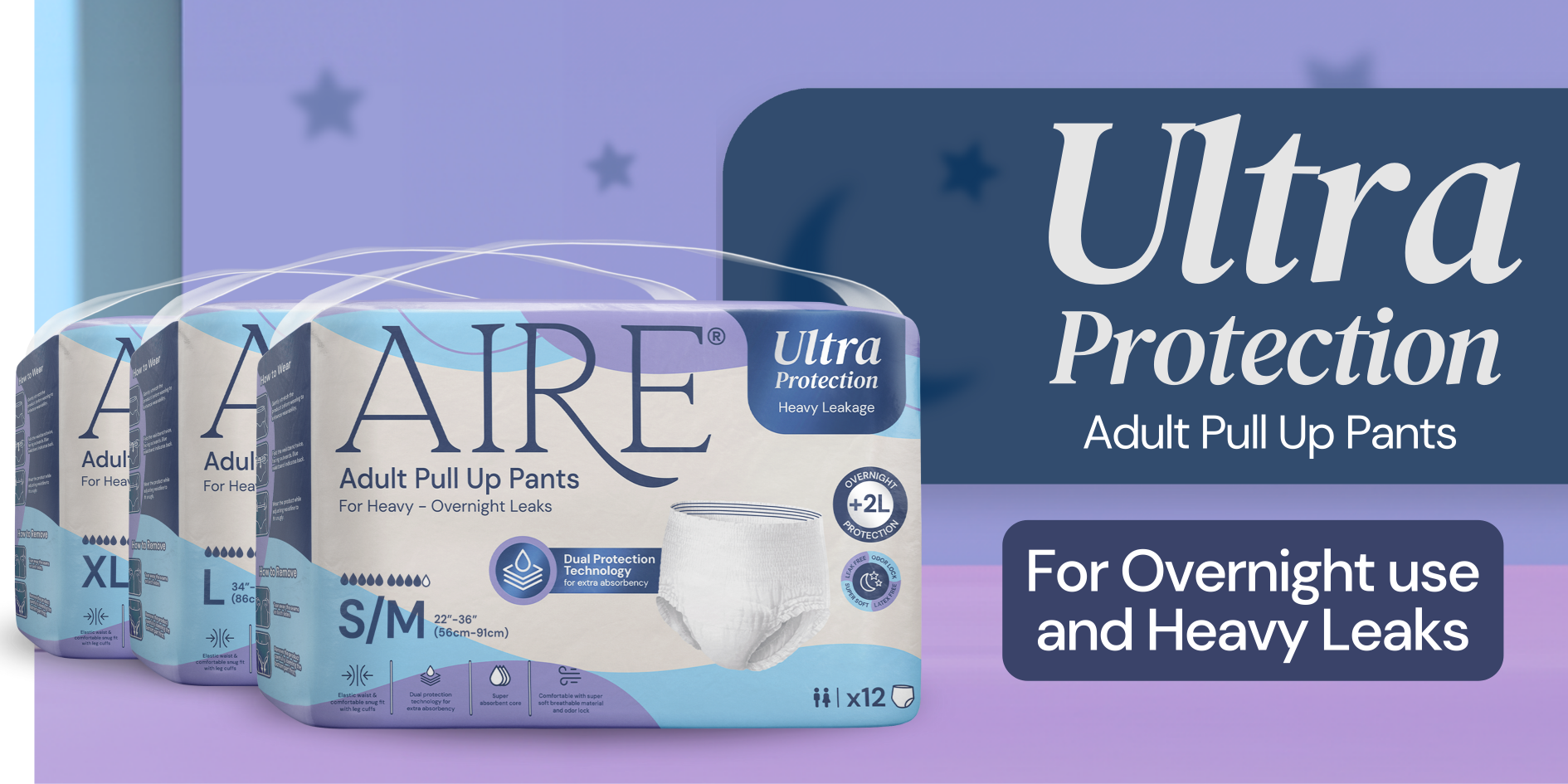
Reliable protection removes a layer of anxiety that itself makes symptoms worse. Aire offers a free sample pack so you can find the right fit and absorbency for your working day before committing to a full order.
References
COB Foundation. How Stress Affects Your Bladder. cobfoundation.org
Pelvic Obstetric and Gynaecological Physiotherapy. Management of Urinary Frequency, Urgency and Urge Incontinence. thepogp.co.uk
The Conversation. Why You Should Not Make a Habit of a Just in Case Wee. theconversation.com
Occupational Medicine. Prevalence, Management and Impact of Urinary Incontinence in the Workplace. academic.oup.com
