

About 1 in 10 men over 60 experience urinary incontinence, and that figure rises to more than 1 in 5 among men aged 65 and older. In Singapore, less than 30% of men with moderate to severe urinary symptoms ever seek medical attention. Most manage it quietly, without ever finding out what is actually causing it or what could help.
This post is for them, and for the people who care about them.
Why it happens
The causes of incontinence in men are quite different from those in women, and understanding which one applies makes a real difference to how it can be managed.
The prostate. The prostate gland sits just below the bladder and surrounds the urethra. As men age, it tends to grow, a condition known as benign prostatic hyperplasia or BPH. By the time a man reaches his 60s, there is roughly a 50% chance his prostate has enlarged to some degree. By his 80s, that figure rises to around 80%.
An enlarged prostate puts pressure on the urethra and makes it harder for the bladder to empty fully. This leads to a weak or slow urine stream, difficulty starting to urinate, the feeling of never fully emptying, and more frequent nighttime trips to the bathroom. Over time the bladder can become overactive in response, leading to sudden urgency and leaks.
Prostate surgery or treatment. Men who have had surgery for prostate cancer or an enlarged prostate may experience incontinence as a side effect. The muscles and nerves that control bladder function sit very close to the prostate and can be affected during treatment. For most men this improves significantly over time with the right rehabilitation, but it requires active management and patience.
Nerve damage. Conditions like diabetes, multiple sclerosis, or a history of spinal injury can affect the nerves that coordinate bladder function. When those signals are disrupted, the bladder may not receive or send signals properly, leading to either urgency and leaks or difficulty emptying fully. Diabetes in particular is closely linked to bladder dysfunction, and this connection is often underappreciated.
Age-related changes. As men get older, bladder capacity tends to reduce and the muscles supporting bladder control weaken gradually. While this does not cause incontinence on its own, it makes other contributing factors more likely to tip the balance.
The types men experience
Urge incontinence is the most common type in men. It involves a sudden, strong need to urinate that is difficult to control, sometimes leading to a leak before reaching the bathroom. It is often linked to an overactive bladder, which can result from an enlarged prostate or nerve changes.
Stress incontinence in men is less common but does occur, particularly after prostate surgery. It causes leaks during physical activity like coughing, sneezing, lifting, or exercise.
Overflow incontinence happens when the bladder cannot empty properly and urine leaks because it has nowhere else to go. It often presents as a constant low-level dribble rather than a sudden leak, and is closely linked to an enlarged prostate or nerve damage. Our post on overflow incontinence explains this in more detail.
What actually helps
The right approach depends on the cause, which is why a GP assessment is always the best first step. But here is what the evidence supports for most men.
Pelvic floor exercises are one of the most effective and most overlooked options. Many men do not realise they have a pelvic floor, or that exercising it can meaningfully improve bladder control. Research shows that pelvic floor exercises significantly reduce leakage in men recovering from prostate surgery, and help with urge incontinence more broadly. Our guide on Kegel exercises covers how to do them correctly and how to build the habit without it feeling like a big undertaking.
For men with urge incontinence, bladder training gradually retrains the bladder to hold more and respond less urgently. Our post on bladder training explains how to start.
Lifestyle adjustments also make a consistent difference. Reducing caffeine and alcohol, managing weight, staying hydrated without drinking too much in the evening, and treating constipation all reduce the frequency of leaks over time.
For men with an enlarged prostate, medication can reduce the size of the prostate and improve urinary symptoms significantly. For those who have had prostate surgery, physiotherapy and sometimes further procedures are available. A GP or urologist can assess which option fits the situation best.
When to see a doctor
If urinary symptoms have been present for more than a few weeks, whether that is urgency, frequency, a weak stream, difficulty emptying, or leaks, it is worth raising with a GP. Many men wait years before seeking help, during which time symptoms often worsen and daily life quietly gets smaller around them.
In Singapore, referrals to a urologist are available through polyclinics, and many treatments are subsidised for eligible patients.
In the meantime
Having the right protection in place means daily life does not have to revolve around managing symptoms. Aire's products are designed for both men and women, with sizing and materials tailored specifically for Asian body types.
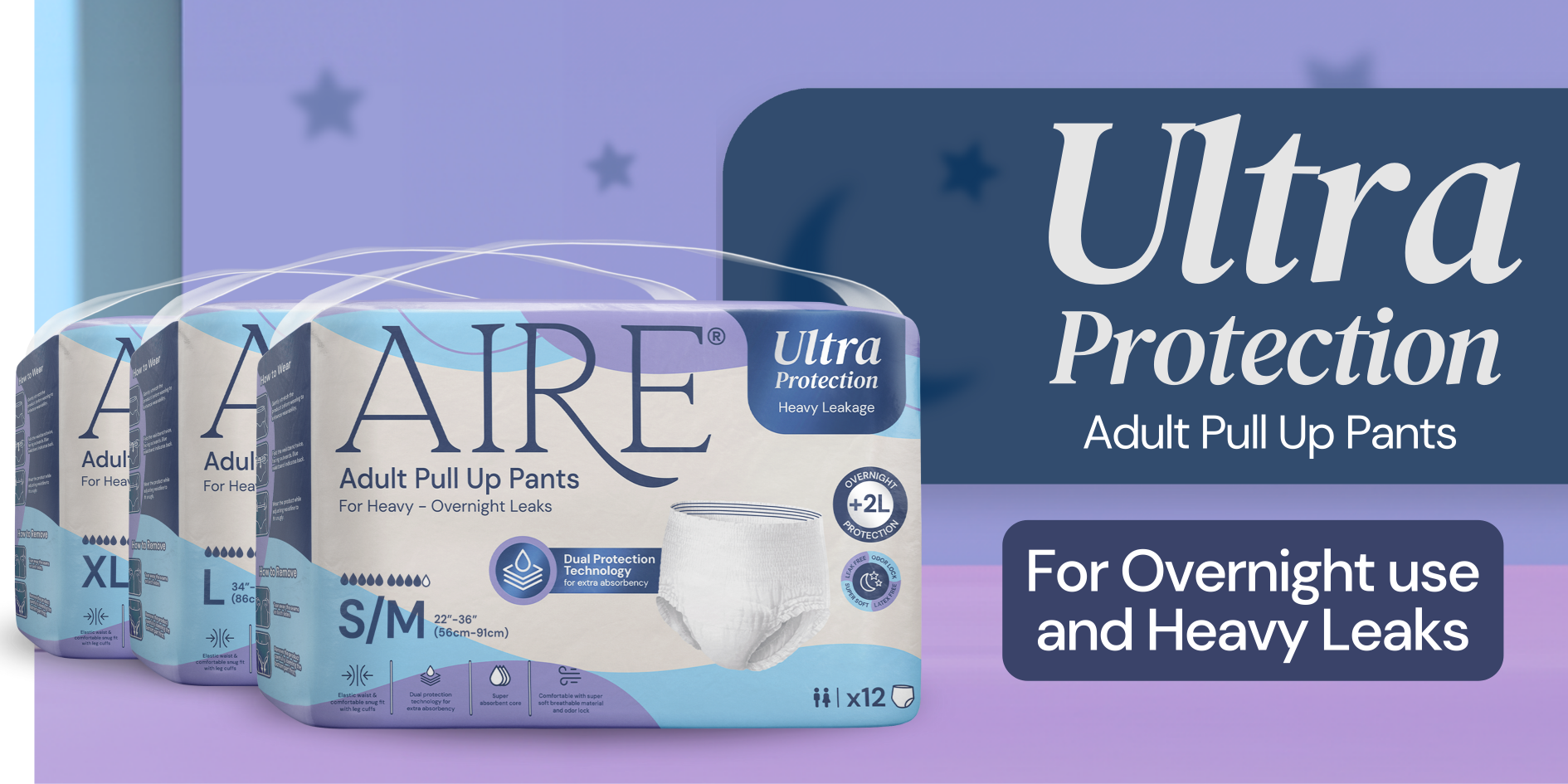
For men who are still active and managing independently, Aire's pull-up pants are designed to feel like regular underwear. They are discreet, easy to put on and remove, and comfortable enough for a full day out without drawing attention. The standard Adult Pull-Up Pants handle moderate daytime leakage, while the Ultra Protection Pull-Up Pants offer more than 2 litres of absorbency for heavier leakage or overnight use.
For men who need caregiver assistance or spend more time lying down, Aire's Ultra Protection Tape Diapers offer the same more than 2 litres of absorbency with adjustable side tapes that make changes easier without fully disturbing the person wearing them.
All Aire products are latex-free, fragrance-free, and lotion-free, making them suitable for sensitive skin. Aire offers a free sample pack if you want to try before committing to a full order.
