

Waking up to rush to the bathroom. Finding a wet sheet in the morning. Lying awake wondering if a leak will happen before you fall asleep.
If this sounds familiar, you are not alone. Nighttime incontinence is one of the most common and least talked about parts of managing bladder control. It affects men and women of all ages and it has a real impact not just on sleep, but on the whole household.
Why nighttime leaks happen
Your body actually has a built-in system to help you sleep through the night. A hormone called antidiuretic hormone, or ADH, typically signals the kidneys to reduce urine production during sleep. In people with nighttime incontinence, this system does not always work the way it should.
While sleeping, the brain receives weaker bladder signals than it does during waking hours, and muscles throughout the body relax, including those that support bladder control. This makes it harder to respond quickly when the bladder fills.
There are a few different reasons this happens, and knowing which one applies can help you manage it better.
Too much urine is produced at night. Several causes have been identified, including dietary imbalance, poor sleep quality, bladder storage and emptying issues, and hormonal factors. Drinking too much in the evening, having caffeine or alcohol before bed, or certain medical conditions can all play a part.
The bladder cannot hold enough. Some people have a bladder that is more sensitive or fills up faster than usual, even at night.
The pelvic floor muscles are weak. Weak pelvic floor muscles are a frequent cause of incontinence, including nighttime incontinence. Sometimes these muscles are so weak that they cannot prevent leakage from the bladder overnight.
For men, the prostate can be a factor. An enlarged prostate puts pressure on the bladder and can cause frequent nighttime urination. If you are a man over 50 experiencing nighttime leaks, it is worth seeing a doctor to check this out.
If you want to understand the difference between nighttime leaks and nocturia, which is waking up to urinate rather than leaking during sleep, we have a post on that too.
For caregivers and family members
If you are caring for an elderly parent or loved one, nighttime incontinence adds a real layer of stress to an already full role. Disrupted sleep, changing sheets at 2am, and managing skin health after leaks are all hard.
The most important thing to know is that nighttime leaks are not a sign of poor care. They are a medical condition with practical solutions. A few small changes to the daily routine and the right overnight protection can make a real difference for everyone involved.
What actually helps
Manage fluids in the evening. This does not mean cutting out water. Staying hydrated through the day is important. But reducing fluids in the two to three hours before bed, especially caffeine and alcohol which irritate the bladder, gives the body less to process overnight.
Empty the bladder fully before bed. Take time to sit on the toilet before sleeping and make sure the bladder is fully empty. Do not rush it. A quick visit where the bladder is only partially emptied can mean waking up much sooner than expected.
Do pelvic floor exercises consistently. Pelvic floor exercises can lead to a significant increase in urinary function over time , including at night. The Kegel exercises in our exercise series are a good place to start and can be done any time of day.
Keep the path to the bathroom clear and safe. A quarter of all falls in older adults happen overnight, and 25% of those are directly related to nocturia. Good lighting, a clear path, and non-slip surfaces matter, especially for elderly family members getting up in the dark.
Use the right overnight protection. This is often the most practical and immediate solution. Overnight adult diapers and pull-up pants are designed differently from daytime products. They hold more, absorb faster when lying down, and are built to protect skin through a full night's sleep.
Skin care matters overnight
One of the less talked about consequences of nighttime leaks is skin irritation. Lying in damp conditions for hours can cause rashes and discomfort, especially in Singapore's heat and humidity. Changing as soon as possible and applying a barrier cream after cleaning the skin gently are good habits to build. We cover how to prevent adult diaper rash in more detail separately.
The right overnight product makes a difference
Aire's Ultra Protection Tape Diapers are designed specifically for overnight and heavy leakage use, with +2L absorbency, a fully breathable backsheet, and a cloth-like feel that is gentle on skin even after hours of wear. The adjustable magic tape also means caregivers can make changes during the night without fully waking the person they care for.
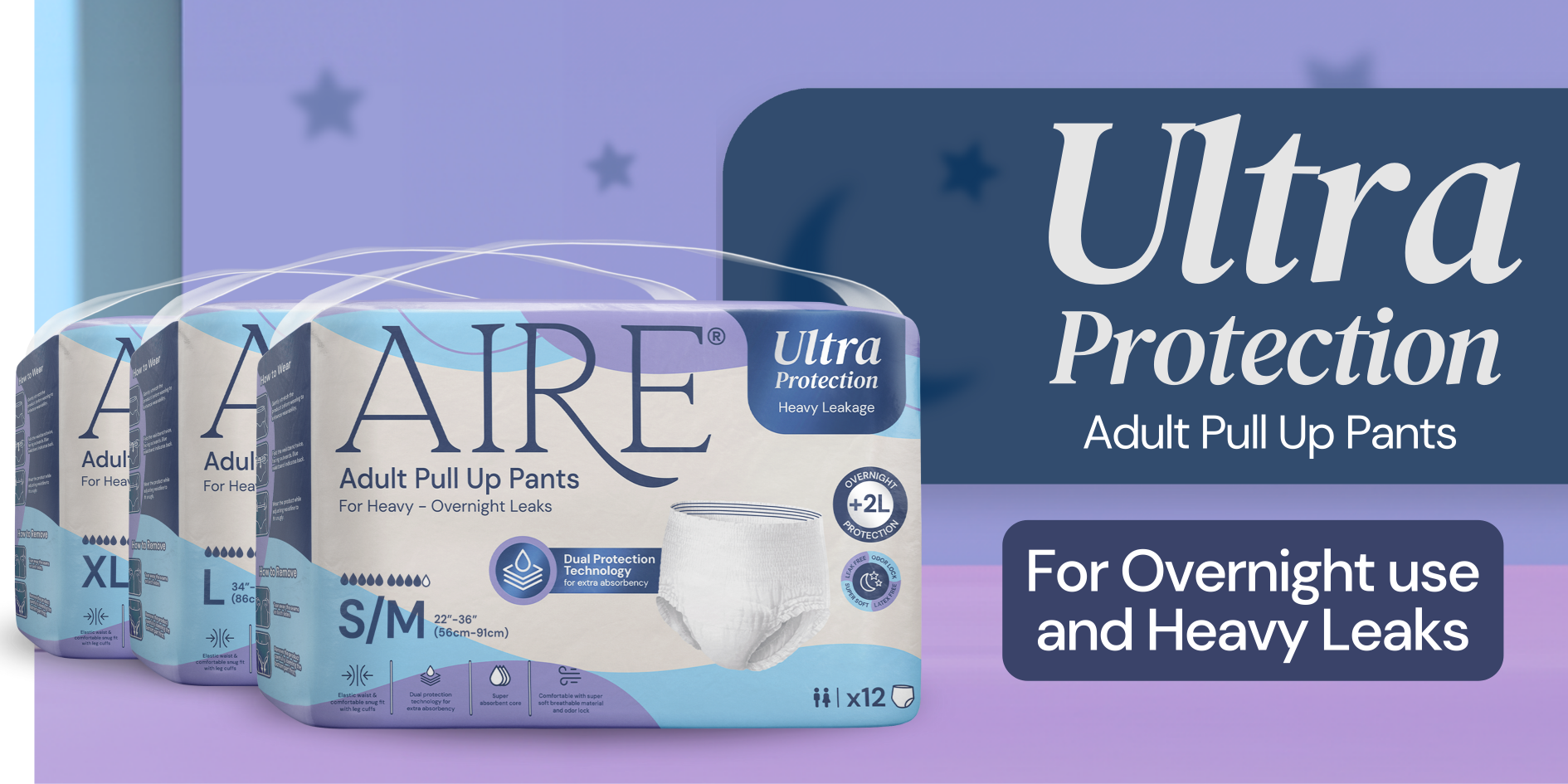
For those who prefer to manage more independently at night, Aire Ultra Protection Pull-up Pants offer the same +2L protection in a style that feels like regular underwear.
Not sure which is right? Try our free sample pack first. And if you need help deciding on sizing or which product suits your level of leakage, we have both covered.
