

Here is something many seniors do not realize: exercise is not the enemy when it comes to incontinence. In fact, the right kind of movement can actually help you manage it better.
If you have been holding back from your morning walk, skipping your favorite aerobics class, or avoiding family outings because you are worried about leaks, this one is for you.
You deserve to keep moving. And with the right approach, you absolutely can.
Why Exercise Actually Helps With Incontinence
It might feel safer to stay home and stay still. But avoiding exercise can actually make things worse over time. Staying active helps maintain a healthy weight, which reduces pressure on the bladder. It also strengthens the muscles that support bladder control, and that makes a real difference.
The key is choosing the right type of exercise. Some movements support your bladder. Others, if done without proper preparation, may put more pressure on it. Once you know the difference, staying active becomes a lot less stressful.
And when you feel properly protected and comfortable, it becomes much easier to stay active with confidence.
The Best Exercises for Seniors Managing Incontinence
1. Kegel Exercises, Your Best Friend
If there is one exercise every senior managing incontinence should know, it is Kegels. These are gentle exercises that strengthen your pelvic floor muscles, the muscles that support your bladder and help control leakage.
The best part? You can do them almost anywhere. Sitting on the sofa, watching TV, or even waiting for your kopi at the coffee shop.
How to do them
• Sit or lie down comfortably
• Imagine you are trying to stop the flow of urine and gently squeeze those muscles
• Hold for 3 to 5 seconds, then relax for 3 to 5 seconds
• Repeat 10 times, three times a day, morning, afternoon, and evening
A tip from MedlinePlus: make sure your thighs, buttocks, and stomach stay relaxed while doing Kegels. Only the pelvic floor muscles should be working.
Results usually appear within a few weeks to a few months when done consistently. The important thing is to keep going, even after you start feeling improvement.
2. Brisk Walking
Good news for those who enjoy their morning walks at the park. Walking is one of the best exercises you can do. Research shows that mild to moderate activity like brisk walking can help reduce incontinence symptoms over time.
Start with 20 to 30 minutes a few times a week and build up gradually. Singapore has plenty of shaded park connectors and neighbourhood routes that are perfect for a comfortable morning stroll.
A few things to keep in mind:
• Wear comfortable, supportive shoes
• Stay hydrated. Drinking enough water keeps your urine less concentrated and your bladder less irritated
• Wear reliable protection so you can focus on enjoying your walk rather than worrying about leaks
Feeling secure and comfortable can make it much easier to stay active and enjoy your time outdoors.
3. Seated Marching
This exercise is great if you prefer something low impact or if standing exercises feel challenging. Seated marching can be done right from your favourite chair at home.
How to do it
• Sit upright with your feet flat on the floor
• Lift one knee towards your chest while gently activating your pelvic floor muscles
• Lower it back down and switch to the other side
• Repeat 10 times on each leg
It gently works your pelvic floor and hip muscles without putting strain on your joints. Perfect for a simple morning routine.
4. Bridge Pose
The bridge exercise strengthens your pelvic floor, glutes, and lower back at the same time. It is low impact, easy on the joints, and something you can do on a yoga mat at home.
How to do it
• Lie on your back with your knees bent and feet flat on the floor, hip width apart
• Gently engage your pelvic floor muscles
• Slowly lift your hips off the floor until your body forms a straight line from shoulders to knees
• Hold for a few seconds, then lower back down slowly
• Repeat 10 times
5. Gentle Yoga and Stretching
Gentle yoga can also help seniors manage incontinence by improving core strength, flexibility, and pelvic floor support. Some studies suggest that structured yoga programmes may help reduce incontinence episodes in older adults.
You do not need to be flexible or have any prior experience. Simple stretching and beginner friendly yoga classes designed for seniors are widely available in Singapore, including at many community centres.
Look for classes that focus on breathing, gentle movement, and core strengthening. Avoid poses that put heavy downward pressure on the abdomen, and let your instructor know about your needs so they can guide you safely.
Exercises to Be Mindful Of
Most exercises are still possible with the right preparation, but a few may require extra care.
Heavy lifting and high impact jumping
These movements put sudden downward pressure on the pelvic floor and may trigger leaks. If you enjoy these activities, consider speaking with a physiotherapist about safer modifications.
Running
The repeated impact can be challenging for those with weaker pelvic floor muscles. Starting with brisk walking and gradually building up strength may be a better option.
Sit ups and crunches
These exercises can increase abdominal pressure. Gentler core exercises such as the bridge pose may be more suitable for beginners.
How to Stay Protected While You Exercise
One of the biggest reasons seniors avoid exercise is the worry about leaks in public. The right protection can make a big difference, allowing you to focus on movement instead of worry.
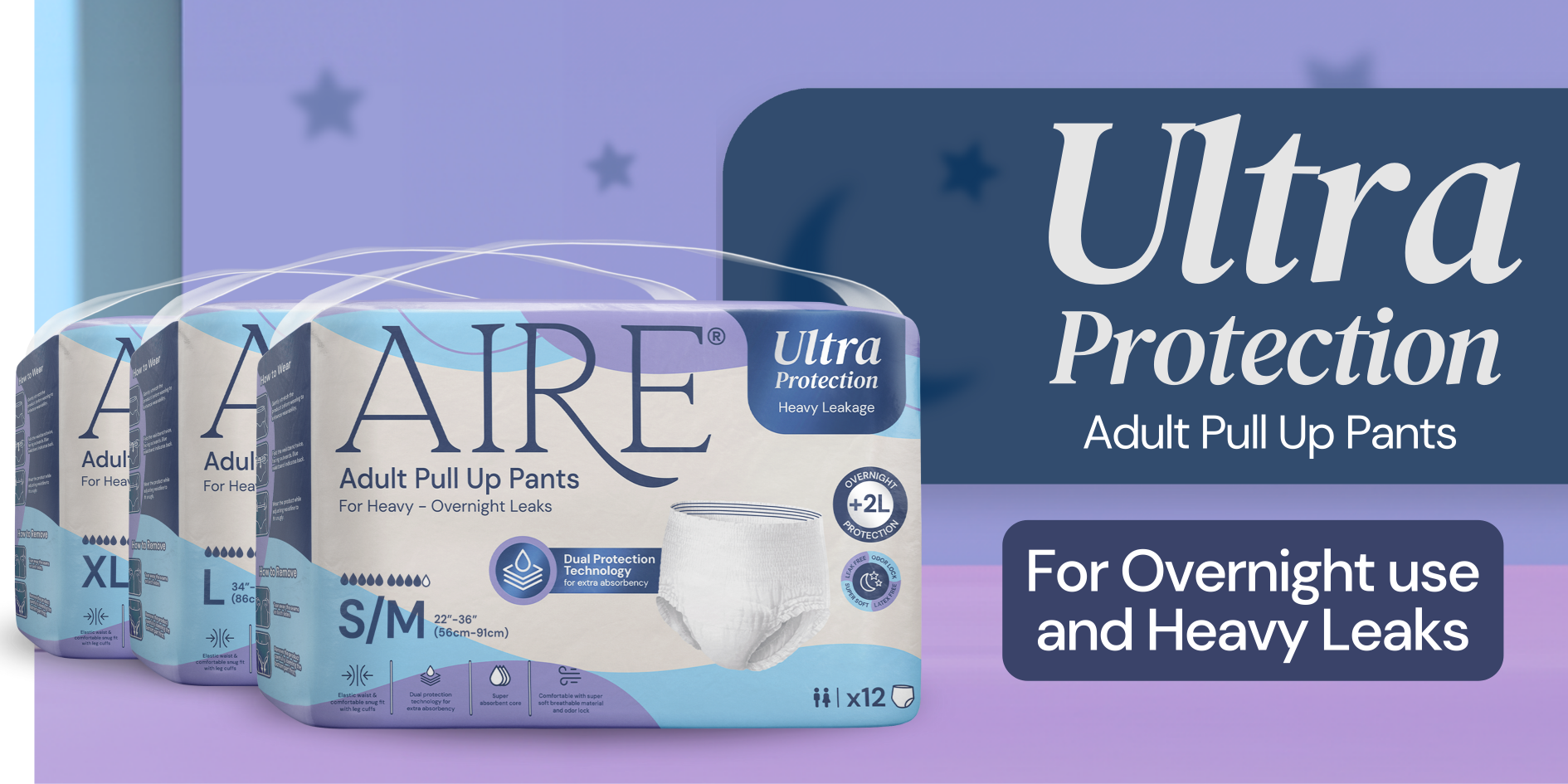
AIRE Adult Pull Up Pants are slim, discreet under clothing, and breathable for Singapore’s humid weather, making them comfortable for everyday movement and light exercise. They are available in two absorbency levels to suit different needs: AIRE Adult Pull Up Pants provide reliable everyday protection with absorbency of up to 1L, while AIRE Ultra Adult Pull Up Pants offer higher absorbency of up to 2L for longer outings, walks, or exercise sessions when you may want that extra peace of mind.
With the right protection and gentle exercises, staying active can feel much easier and more comfortable.
Keep Moving, One Step at a Time
Managing incontinence does not mean giving up the activities you enjoy. With the right exercises, proper protection, and a little patience, it is absolutely possible to stay active and continue living life fully.
Sometimes, the smallest steps such as a short walk around the neighbourhood or a few minutes of gentle stretching can make a meaningful difference over time.
And most importantly, you are not alone on this journey.
References
MedlinePlus, Kegel Exercises Self-Care medlineplus.gov/ency/patientinstructions/000141.htm, Under "How to do Kegel Exercises"
Mayo Clinic, Kegel Exercises: A How-To Guide for Women mayoclinic.org/healthy-lifestyle/womens-health/in-depth/kegel-exercises/art-20045283
Mayo Clinic, Kegel Exercises for Men mayoclinic.org/healthy-lifestyle/mens-health/in-depth/kegel-exercises-for-men/art-20045074
NIDDK (National Institute of Diabetes and Digestive and Kidney Diseases), Kegel Exercises niddk.nih.gov/health-information/urologic-diseases/kegel-exercises
