

Managing incontinence at home is one thing. You know the layout, you have a routine, and most days things feel reasonably under control. Then you board a flight or settle in for a long drive and suddenly everything feels harder. More urgency, more leaks, less sleep. If that sounds familiar, there are real reasons behind it, and most of them come down to how travel disrupts the conditions your bladder depends on.
Sitting for long stretches puts pressure on the pelvic floor
The pelvic floor is the group of muscles that supports the bladder and helps control when you release urine. When you sit for hours without moving, these muscles bear sustained gravitational load, which over time causes them to strain and fatigue. A tired pelvic floor means less control when an urge comes on.
Posture plays a role too. Slouching or rounding the lower back, which is easy to slip into on a long journey, shifts load from the bones onto the soft tissue and reduces blood flow to the muscles. If you manage stress incontinence, this matters more than you might expect. Standing up from your seat, lifting bags into the overhead compartment, or walking quickly to the bathroom all become higher-risk moments when the pelvic floor has been compressed for hours.
Getting up and moving around every hour or two, even just a short walk to the back of the plane, takes the pressure off and keeps things more manageable.
Drinking less actually makes urgency worse
When travelling with incontinence, many people cut back on fluids to reduce bathroom trips. It is an understandable instinct, but it tends to backfire.
When you are not drinking enough, the kidneys concentrate urine to conserve water. Concentrated urine is higher in acidity and irritants, and an irritated bladder lining becomes more sensitive. It starts sending urgency signals at lower volumes than usual, so you end up needing to go more often and more urgently, even though there is less urine to pass.
Flying makes this harder because aircraft cabins are very dry. Humidity in the cabin typically sits between 10 and 20 percent, compared with around 40 to 50 percent in most buildings. The dry air increases fluid loss through the skin and breath without you noticing. Drinking steadily throughout the flight rather than waiting until you feel thirsty keeps urine more dilute and reduces irritation. Small sips consistently are more effective than drinking large amounts at once.
Anxiety about the trip puts the bladder on edge
The unfamiliarity of travel, not knowing where bathrooms are, the stress of airports or long drives, all of this activates a stress response in the nervous system. Cortisol and adrenaline are released, and as we explored in our post on stress and incontinence, these hormones make the brain-bladder communication pathway hypersensitive.
The result is that the bladder starts sending urgency signals when it is much less full than it would at home. Even a small amount of urine can feel pressing. For people managing overactive bladder, this heightened sensitivity can be especially difficult in unfamiliar environments where you are already anxious about access.
There is also a feedback loop worth recognising: worrying about an accident makes the bladder more reactive, which increases the chance of one, which adds to the anxiety. Knowing this is a physiological response rather than a sign things are getting permanently worse can make it easier to manage.
Crossing time zones disrupts the hormone that controls nighttime urination
If your trip involves crossing time zones, this is why nighttime leaks tend to worsen in the first few days of a trip.
During normal sleep, the body produces more of a hormone called antidiuretic hormone, or ADH. This signals the kidneys to slow urine production overnight, which is why most people can sleep for several hours without needing the bathroom. ADH follows the body clock. When jet lag shifts your internal clock, ADH release does not immediately adjust to match the new local night. The kidneys continue producing urine at a daytime rate during hours when you are trying to sleep.
If you already manage nocturia or nighttime incontinence, jet lag can make the first few nights significantly harder. The good news is that this is temporary. As the body clock adjusts over several days, ADH patterns return to normal and nighttime symptoms usually settle back to their usual level.
What to do differently when you travel
Once you understand what is actually happening, the practical steps follow naturally.
Keep drinking steadily through the day rather than cutting back, and stick to water where possible. Caffeine and alcohol both increase urine production and can worsen urgency, so it is worth reducing these before and during travel. On long flights or drives, move around regularly to give the pelvic floor a break. If you are crossing time zones, plan for the first few nights to be harder and use a higher absorbency product overnight until your body clock settles.
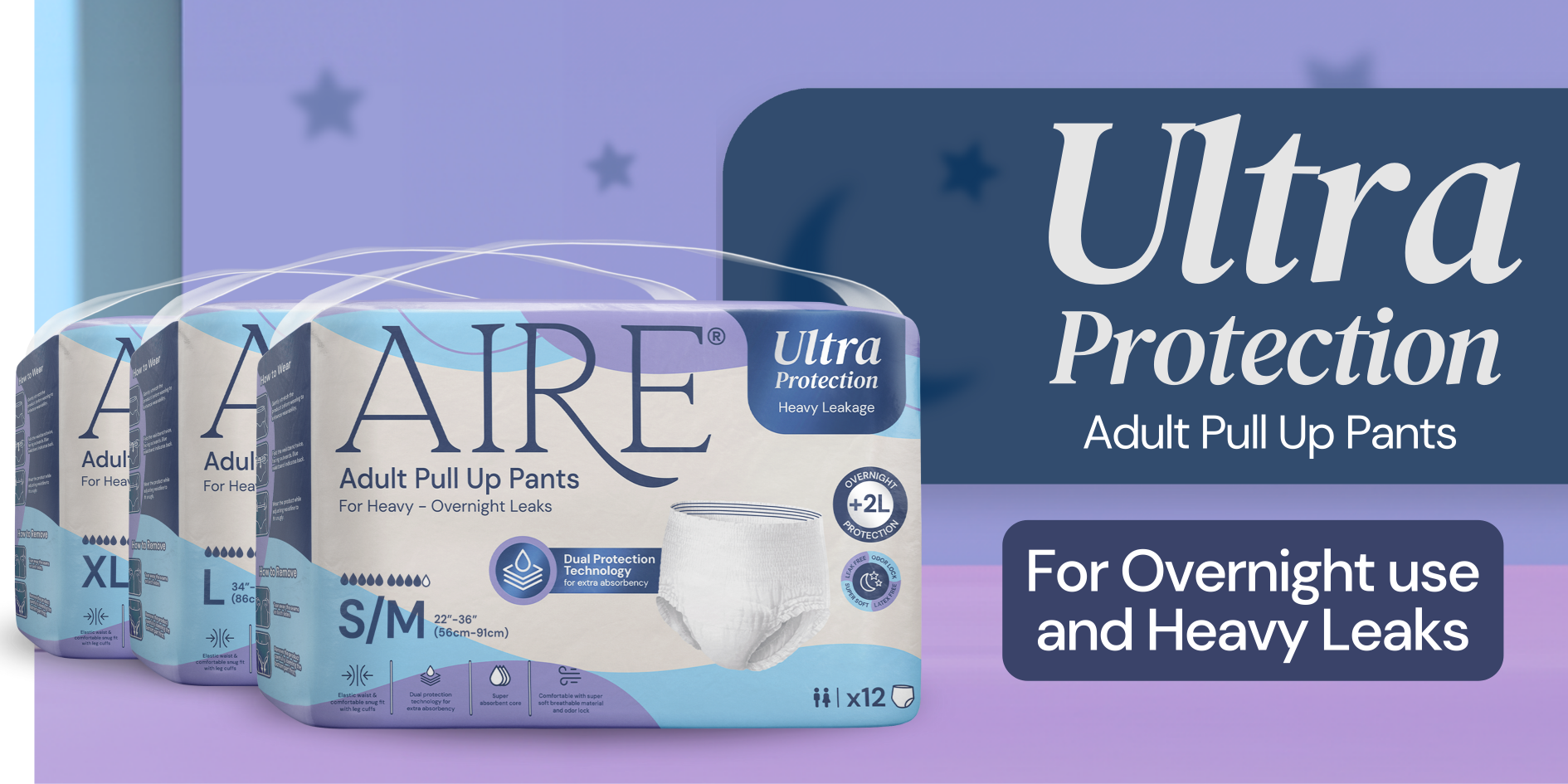
It is also worth thinking about protection before you leave rather than scrambling mid-trip. If your usual product works fine at home but feels like it is not keeping up on the road, that is because the conditions genuinely are harder, not because anything has permanently changed. Aire offers a free sample pack if you want to try a higher absorbency option before your next trip.
References
Civil Aviation Authority. Physiology of Flight. caa.co.uk
Byram Healthcare. Can Sitting Too Long Damage the Pelvic Floor? byramhealthcare.com
Byram Healthcare. How Sleep Quality Affects Urinary Health. byramhealthcare.com
Byram Healthcare. How Stress and Anxiety Affect Bladder Control. byramhealthcare.com
Arkansas Urology. How Dehydration Affects the Bladder. arkansasurology.com
UroToday. Disruption of Circadian Rhythm as a Potential Pathogenesis of Nocturia. urotoday.com
