

When you are managing incontinence for yourself or your loved ones, cost is always a consideration. Diapers need to be purchased regularly, and it is natural to look for ways to keep expenses manageable. It is completely understandable to look for more affordable options.
But what is often not talked about is this: the impact is not just on performance. It is on the skin. And sometimes, the effects show up faster than expected.
Why Skin Health Matters More Than You Think
The skin under a diaper is naturally warm, sensitive, and often exposed to moisture. A good diaper keeps moisture away from the skin and keep it contained. When it doesn’t, irritation can start much sooner than expected.
Moisture stays on the skin for too long. Low-quality diapers are often made with cheaper materials that have lower absorbency capacity. Instead of locking moisture away, they allow urine to sit against the skin. Over time, this breaks down the skin's natural protective barrier, making it red, sore, and much more vulnerable to infection.
Skin becomes inflamed and irritated. This is known as incontinence-associated dermatitis (IAD). It starts as redness and skin that looks shiny or wet even after a change. If it is not caught early, the skin begins to break down and become raw. For elderly individuals whose skin is already thinner and more prone to irritation, this can happen within hours of using a poorly absorbent product.
Friction causes chafing. Cheaper products are often made with rougher materials and plastic on the outer and inner layers. Every time the person moves, sits, or shifts position, that rough material rubs against the skin. This worsens any existing irritation and can cause surface abrasion over time, particularly for those who spend long hours seated or resting.
Heat builds up beneath the product. Quality incontinence products are designed with breathable materials that allow air to circulate. Cheaper products typically use a plastic outer layer that traps heat against the skin. In Singapore's heat and humidity, this makes an already uncomfortable situation worse. Breathability is not a bonus feature here. It is something the skin genuinely needs. You can read more about managing incontinence in Singapore's climate and why it matters.
Chemical irritants in the product cause reactions. Some lower-cost products contain fragrances or dyes to mask odour. These additives can cause a skin reaction that presents as redness, itching, and inflammation. Quality products designed for prolonged skin contact are fragrance-free, latex-free, and lotion-free for this reason.
The Real Cost of Choosing Cheap
It is a common assumption that a cheaper product saves money. In practice, it often does not. A product with lower absorbency needs to be changed more frequently to prevent skin damage. More frequent changes means more products used per day, which quickly cancels out any saving on the unit price.
On top of everything else, skin issues can take time, effort, and cost more to manage than expected. Rashes that progress to broken skin may need barrier creams, prescription treatments, or wound care products. In more serious cases, secondary infections require antibiotic treatment and GP visits.
There is also the impact on daily life to consider. Someone dealing with skin pain and irritation is less likely to move around, less likely to sleep well, and less likely to feel comfortable going out. For a condition that already affects confidence and quality of life, adding skin complications on top makes everything harder.
What to Look for in a Good Incontinence Product
Not every product that is marketed as quality actually delivers it. Here are the things that genuinely make a difference to skin health:
A soft top sheet. The layer that sits against the skin should be gentle and allow liquid to pass through quickly so moisture does not linger. Look for cottony-soft breathable materials — these reduce friction and heat buildup, which matters especially in Singapore's climate.
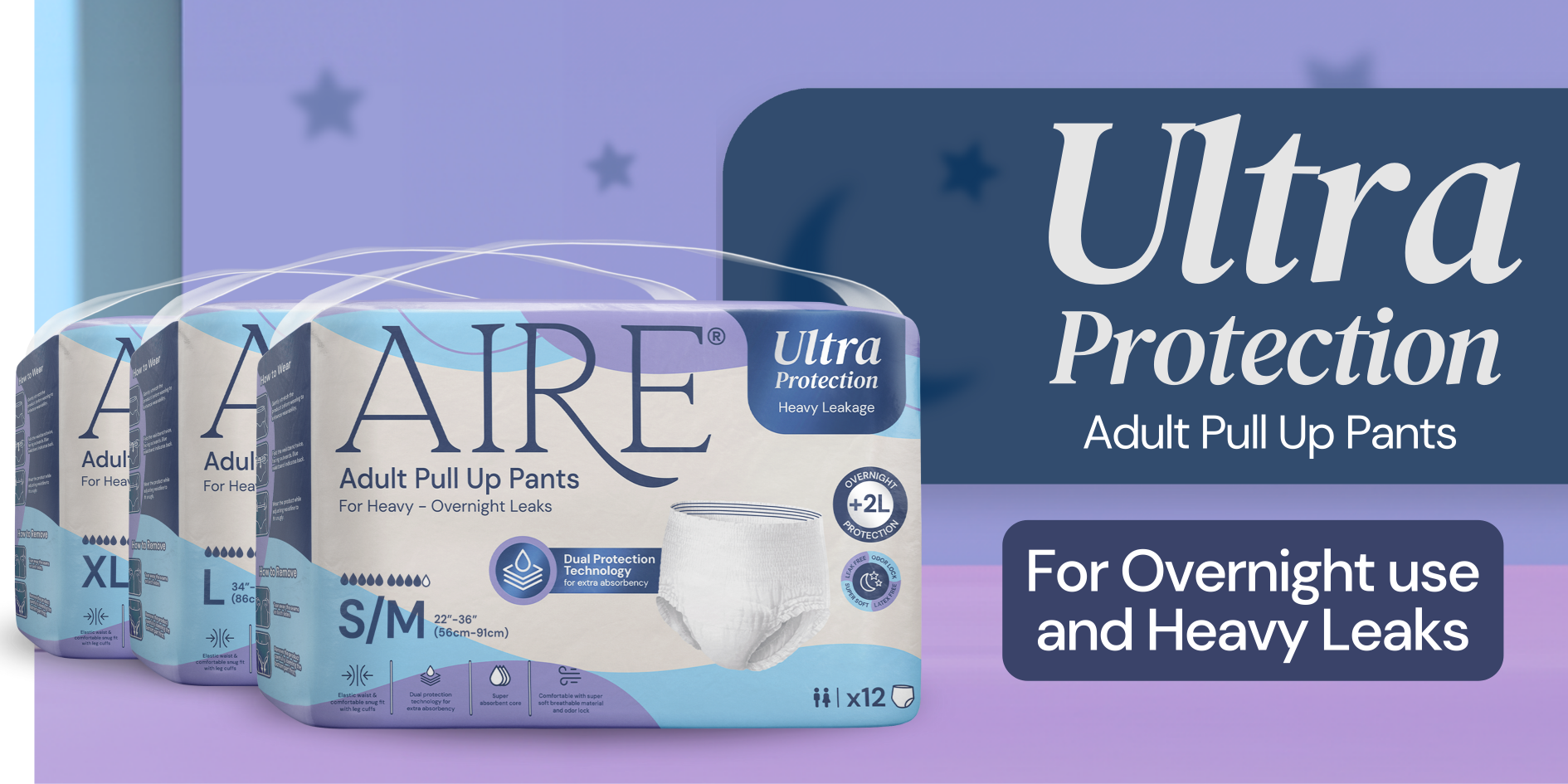
A high-quality absorbent core. The core is where liquid gets locked away. It should contain superabsorbent polymer (SAP), a material that converts liquid into gel so it cannot move back to the skin. The quality of SAP varies significantly between brands - higher grade SAP, such as Japanese SAP used in AIRE products, absorbs faster and keeps the surface drier for longer.
A breathable outer layer. The backsheet should be cloth-like rather than plastic-backed. Aire uses a breathable backsheet allows air to circulate and reduces heat against the skin - important for anyone wearing the product for extended periods, and especially so in a tropical climate.
The right fit for the body. A poorly fitting product causes leakage and friction regardless of material quality. Many products are designed for Western body proportions and do not fit Asian body types well. AIRE is designed with Asian body types in mind, so the fit works where it matters most. Getting the sizing right is one of the most effective steps you can take to protect the skin.
No fragrances, latex, or lotions. These additives are a common cause of skin irritation and serve no protective function. A quality product should be free of all three. It is also worth reviewing common mistakes when buying adult diapers to avoid mismatches that compromise protection.
Early Signs of Skin Damage to Watch For
Look out for signs such as:
• Redness or pink discolouration, especially around skin folds and the inner thighs
• Skin that still appears shiny or damp even after cleaning and drying
• Complaints of stinging, burning, or itching
• Any areas where the skin looks broken, raw, or eroded
If you notice any of these, it may help to increase the frequency of changes, apply a barrier cream, and review the product being used. If the condition worsens or does not improve, it is best to speak to a GP. For a more detailed guide on caring for the skin during changes, aftercare with adult diapers covers the routine in full.
A diaper is more than just a product — it is what protects the skin from constant exposure to moisture. Choosing lower-quality options may seem like a saving, but it often leads to discomfort, irritation, and more effort in the long run.
With the right materials, fit, and absorbency, it helps protect the skin, reduces the need for frequent changes, and makes daily care gentler and more comfortable for both the user and the caregiver.
Don’t Compromise on Care. Choose AIRE.
