

It is one of the most practical questions in incontinence care, and one that does not always have a straightforward answer. Getting the frequency right makes a real difference to both comfort and skin health.
Here is what the hygiene guidelines say, and how to apply them in practice.
The general rule
The most widely used caregiving guideline is to check every two hours and change when wet. This was established in clinical and nursing home settings where skin health is a priority and the consequences of leaving a wet diaper on too long, rashes, pressure sores, and urinary tract infections, are taken seriously.
In practice, most people with moderate incontinence find that a change every three to four hours during the day works well. Those with lighter leakage may be comfortable for longer. Those with heavier incontinence may need more frequent changes.
The key principle is this: a diaper should be changed when it is wet, not when it is full. Waiting until maximum absorbency is reached means the skin has been in contact with moisture for too long.
Daytime vs overnight
Day and night have different requirements, and the products used should reflect that.
During the day, the priority is comfort, discretion, and skin health. Aire's Adult Pull Up Pants hold up to 1 litre and are designed for up to eight hours of daytime use. However, it is advised not to wait until the diaper is at full capacity. Changing it regularly, even before it feels fully used, helps prevent rashes and keeps the skin healthy.
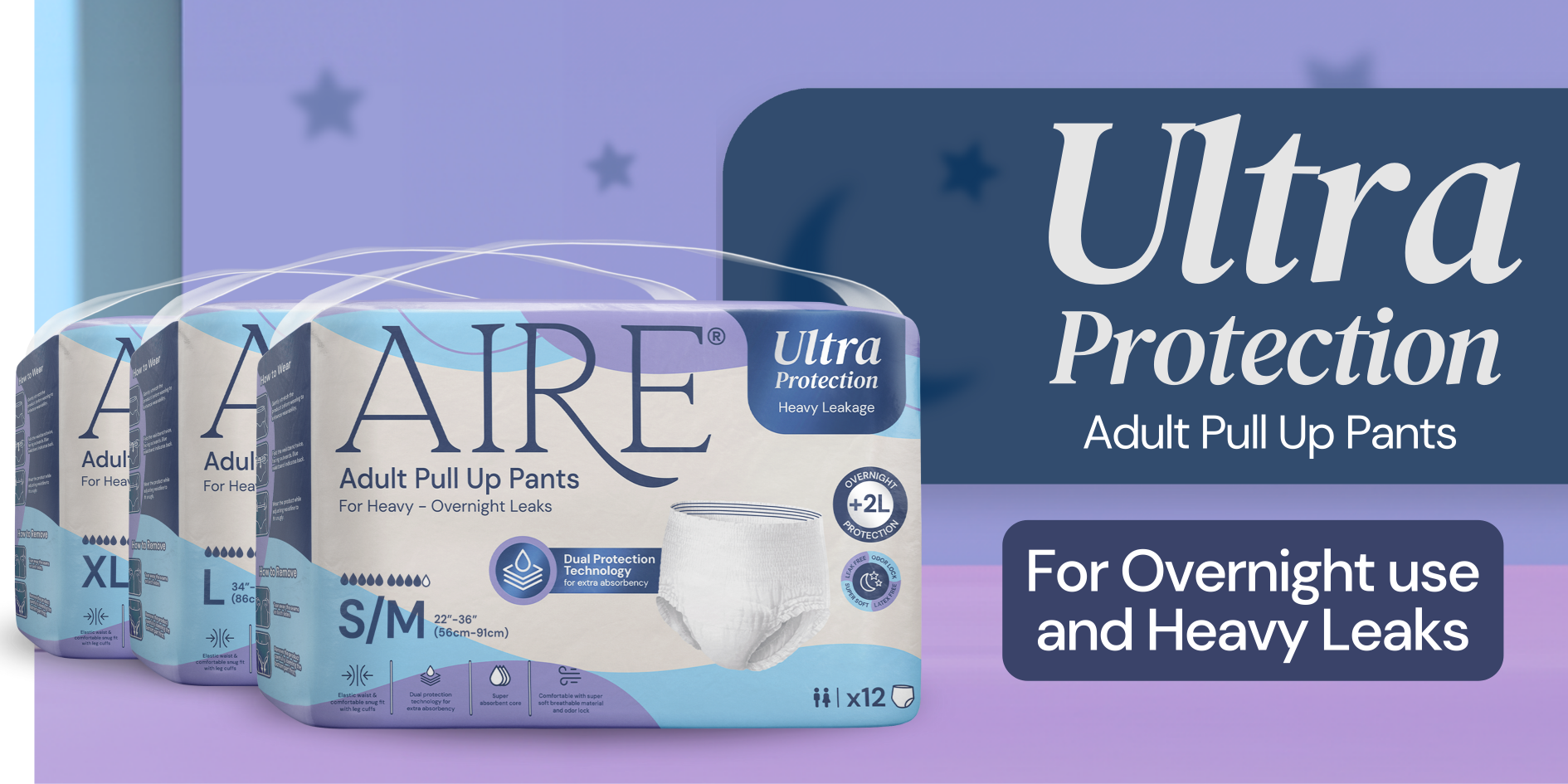
Overnight is different. The goal is uninterrupted sleep without needing a change in the middle of the night. A higher absorbency product designed for overnight wear can safely last up to twelve hours. Aire's Ultra Protection range holds more than 2 litres, which covers more than six urine voids, making it suitable for a full night without a change. A good skin care routine before bed, including a barrier cream, helps protect the skin during longer overnight wear. Our guide on preventing adult diaper rash covers this in more detail.
When to change immediately
Regardless of how long the diaper has been on, change immediately if there is any fecal soiling. Fecal matter contains bacteria that can break down skin very quickly, and leaving it in contact with the skin for even a short time significantly raises the risk of infection and irritation.
Also change immediately if there are any signs of leakage, skin redness, or if the person is visibly uncomfortable.
Signs it is time for a change
Not everyone can communicate discomfort directly, particularly elderly loved ones or those with dementia. A few things to watch for:
Restlessness or fidgeting, which can signal discomfort from a wet diaper. A strong odour, which indicates the diaper has been saturated for too long. Visible redness or irritation around the thighs, hips, or lower back after a change. These are signs that changes need to happen more frequently.
Aire's Ultra Protection Tape Diapers come with a wetness indicator, a blue line on the outside of the product. When the blue line fades, it is a sign that the diaper has been used and it is time for a change. This makes checking easier without having to remove the product, which is particularly helpful for caregivers.
For caregivers
Managing change frequency for a loved one adds to an already full role. A consistent routine helps: check after meals, check before bed, check once during the night if overnight leaks have been an issue. Building it into an existing schedule rather than reacting to signs of discomfort makes the whole process more manageable.
Keeping a spare change of clothes and a few extra products within easy reach, whether at home or when going out, means that when a change is needed it can be handled quickly and with minimal disruption. Our caregiver guide covers more on building a practical routine at home.
The right product makes the schedule easier
How often you need to change depends significantly on the absorbency of the product being used. A lower absorbency product worn by someone with moderate incontinence will need changing more frequently than a high absorbency product designed for heavier leakage.
Choosing the right product for the right time of day, a standard pull up for daytime and an ultra protection option overnight, means fewer changes overall without compromising on hygiene. If you are not sure which product suits your needs, our guide on how to choose the right adult diaper is a good starting point, and Aire offers a free sample pack if you want to try before committing to a full order.
