

Waking up once during the night to use the bathroom feels manageable. Twice starts to break up the sleep. Three times or more, and by morning it feels like the night barely happened at all.
For many seniors, and the families looking out for them, this has become such a familiar part of life that it rarely gets questioned. But it is worth paying attention to, because waking up repeatedly at night to urinate is not something that simply has to be accepted.
What is actually happening
The medical term for this is nocturia, which just means waking up during the night specifically to use the bathroom. It is one of the most common sleep complaints among older adults, and one of the least likely to be brought up with a doctor.
About half of adults aged 60 and above experience it regularly. By 80, that figure rises to around 8 in 10. Most people assume it is just part of getting older. In many ways it is more common with age, but that does not mean nothing can be done about it.
Why it tends to get worse with age
A few things change as the body gets older that make nighttime trips more likely.
The kidneys become less efficient at holding onto fluid during sleep, so more urine gets produced overnight than it used to. The bladder also tends to hold less than it did, which means it fills up faster. And sleep itself becomes lighter with age, so the brain wakes more easily when the bladder sends a signal it might have ignored years ago.
For men, the prostate is often part of the picture too. As it grows with age it puts pressure on the bladder, making it harder to fully empty and leading to more frequent trips both day and night.
Certain medications can also play a role, particularly water tablets taken for blood pressure. If these are taken in the evening, the kidneys end up working harder to process fluid during the night rather than during the day.
Why it matters beyond just sleep
The most obvious effect is a broken night, and the tiredness that follows. But there is more to it than that.
Getting up in the dark, sometimes more than once, carries a real safety risk. A quarter of falls in older adults happen at night, and many are directly linked to getting up to use the bathroom. For seniors who are already a little unsteady on their feet, each nighttime trip is a moment where things can go wrong.
Broken sleep over time also affects mood, energy, and the ability to stay active during the day. These things add up quietly, and it is easy to attribute them to ageing when the real cause is something much more specific and addressable.
What actually helps
A few simple changes make a real difference for most people, and none of them require a prescription.
Reducing fluids in the two to three hours before bed is the most effective starting point. This does not mean drinking less overall during the day, staying hydrated matters. It just means front-loading fluid intake earlier and tapering off in the evening. Cutting back on caffeine and alcohol in the evening helps too, since both increase how much urine the kidneys produce. Our post on foods and drinks that affect the bladder covers this in detail.
Fully emptying the bladder before bed sounds obvious but many people rush it. Taking a little extra time before sleeping can mean the difference between one trip and two.
If swollen legs or ankles are a familiar problem, putting the feet up for an hour in the late afternoon helps the body process that fluid before bedtime rather than during the night.
For those getting up frequently, keeping the path to the bathroom as safe as possible matters. A nightlight along the corridor, non-slip surfaces in the bathroom, and a clear route from the bed all reduce the risk of a fall.
Pelvic floor exercises also help over time by strengthening the muscles that support the bladder, which can reduce urgency and improve control overnight.
When it is worth seeing a doctor
If two or more trips a night has become the norm, it is worth mentioning to a GP. Sometimes nocturia is connected to an underlying condition like diabetes or high blood pressure, or to the timing of medications, and a simple adjustment can make a noticeable difference.
It is one of those things that gets put off because it feels too minor to bring up. But most doctors would rather hear about it early.
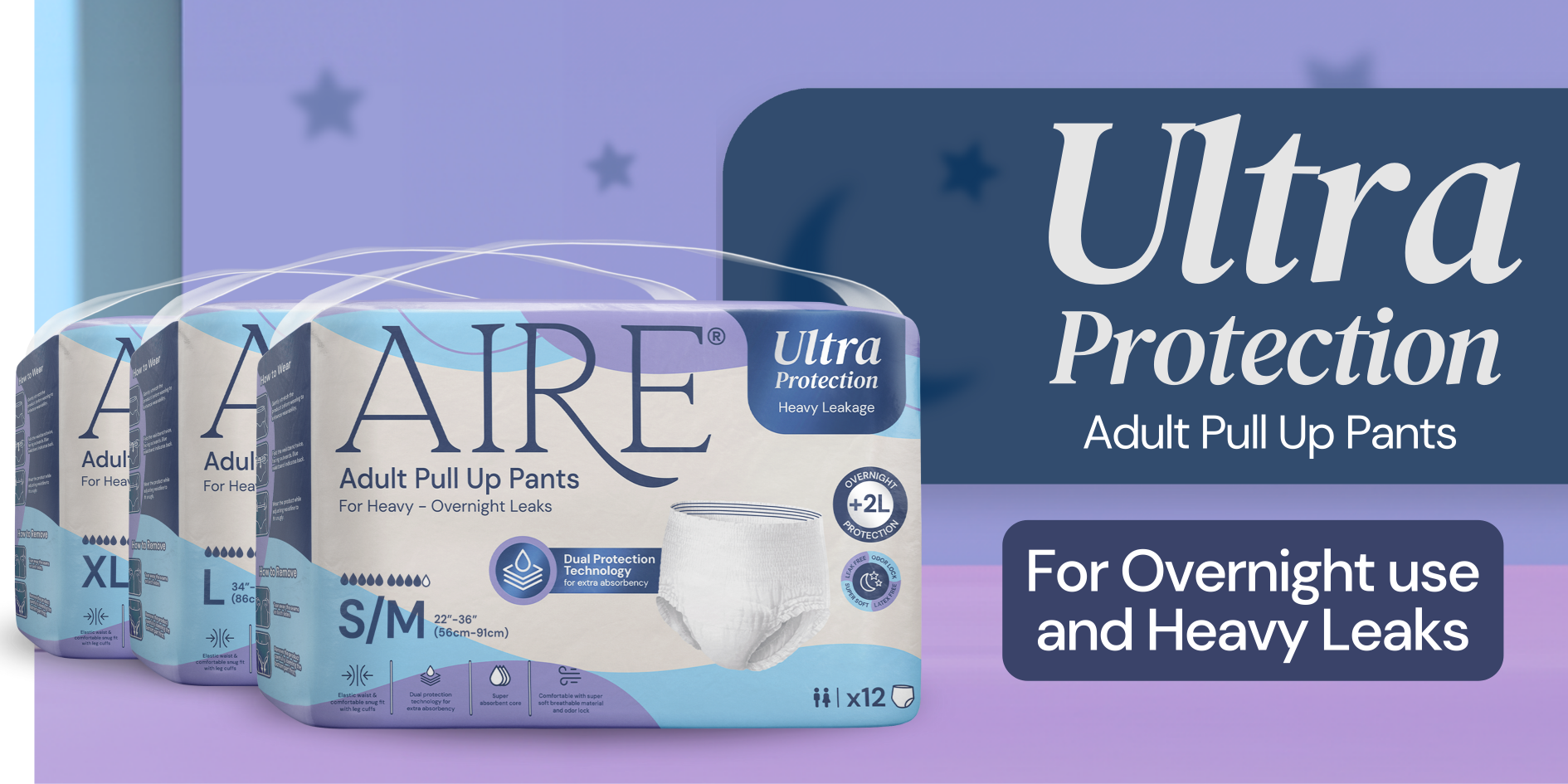
In the meantime, having the right overnight protection means the trips that do happen do not have to disrupt the whole household. Aire's Ultra Protection range is designed for overnight wear with more than 2 litres of absorbency, and Aire offers a free sample pack if you want to try before committing to a full order.
